
Why Your Air Conditioner Needs Power Surge Protection
An air conditioner power surge can destroy a system's compressor, control board, or capacitor in a single event—components that cost $1,000 to $3,500 to replace. Parker County homeowners face this risk every North Texas storm season. CB Air Conditioning and Heating LLC protects AC systems from surge damage before a preventable failure turns into a $5,000 repair.
A power surge doesn't announce itself. One moment your AC runs fine, the next it won't turn on. What looks like a random failure is often a preventable one. Stopping it costs less than a single service call. The good news: surge protection is straightforward and worth doing before storm season arrives.
What an Air Conditioner Power Surge Actually Does to Your System
Most homeowners picture a surge as a lightning bolt, but the majority of damaging surges are smaller and far more frequent. Voltage spikes happen when large appliances cycle on and off, when the grid fluctuates, or when a nearby transformer gets hit. Your AC draws high current and runs on sensitive electronics. That combination makes it one of the most surge-vulnerable appliances you own.
The components that fail first are typically the compressor, the capacitor (the cylindrical component that starts and runs the motor), and the control board. The control board is the brain of the system. It manages everything from temperature sensing to fan speed. A surge that fries it can take a fully functioning air conditioning system and turn it into one that needs full replacement.
North Texas Storms and the Surge Risk Parker County Homeowners Face
Parker County sits in a region with some of the most active storm seasons in the country. Severe weather in North Texas peaks between April and October. Fast-moving thunderstorms, frequent lightning, and aging rural infrastructure mean unstable voltage is a seasonal pattern, not a once-a-decade event.
Homeowners in communities like Azle, TX deal with grid fluctuations common to suburban fringe areas and the storms of a more rural setting. Summer in North Texas means your AC runs nearly continuously for four to five months so a surge can hit at the exact moment the system is working hardest.
How Surge Protection for AC Units Works
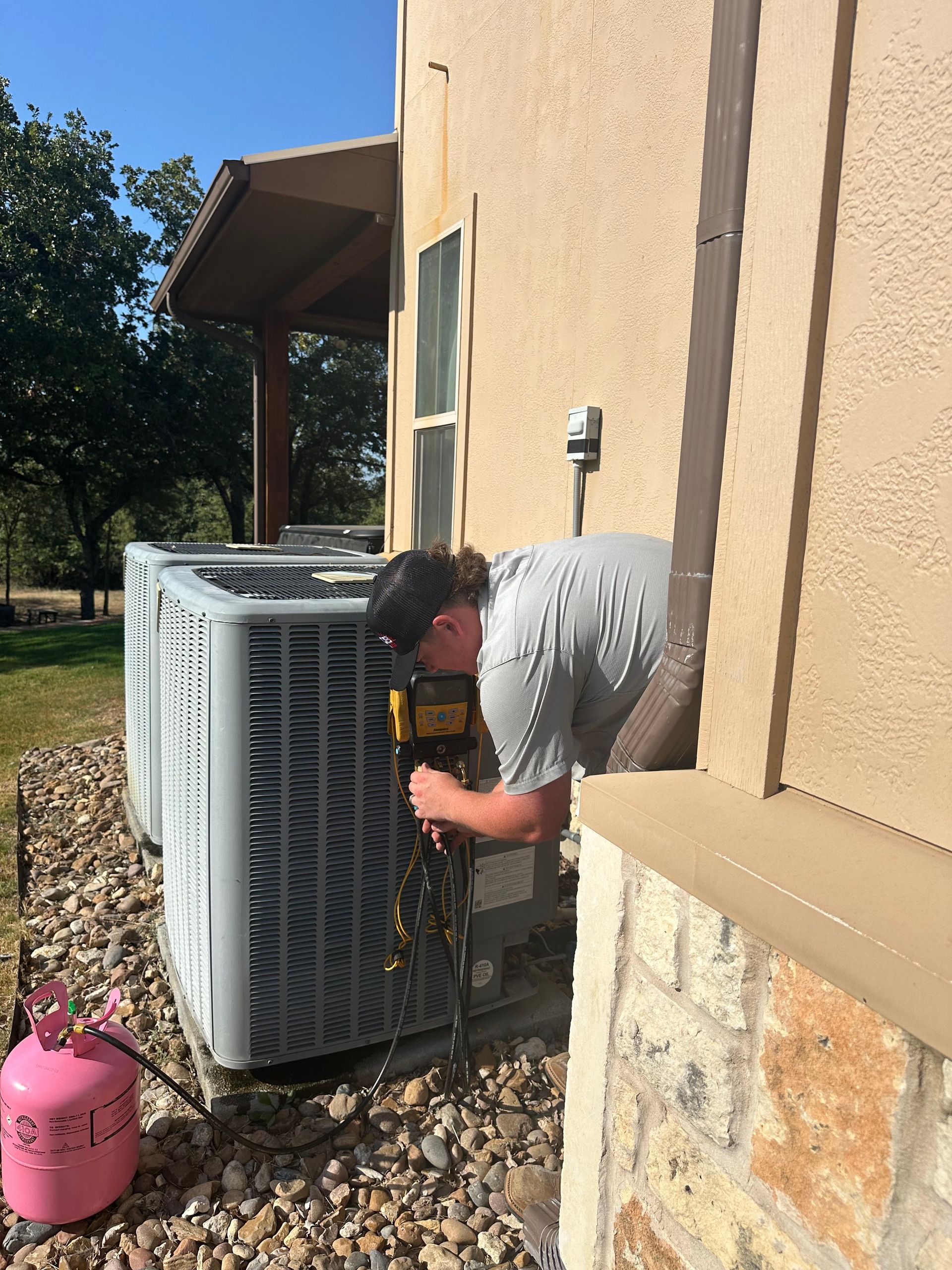
HVAC-rated surge protectors are installed at the disconnect box near the outdoor unit and at the air handler inside. They divert excess voltage away from the system before it reaches sensitive components, acting as a pressure valve for electricity.
These two types of surge protectors work together:
- Whole-home surge protectors are mounted at the main electrical panel. They protect every circuit, including the AC. They’re designed to handle large surges from outside sources like lightning strikes on utility lines.
- Unit-level HVAC surge protectors are installed at the AC disconnect, adding a second layer of defense. They're built to catch smaller internal spikes that whole-home devices sometimes miss.
Most HVAC professionals recommend both. Unit-level protection with installation typically runs $150 to $250, a fraction of what a single compressor replacement costs.
What Happens If Your AC Gets Hit Without Protection?
Without surge protection, a voltage spike travels directly to your system's most vulnerable components. Capacitors absorb the hit first and often blow immediately. The control board may fail at the same moment or degrade over days, making diagnosis harder and the bill larger.
A blown capacitor runs $150 to $400. A failed control board runs $400 to $1,200. A burned-out compressor can hit $1,500 to $3,500—a price point where a full AC replacement is often the smarter call. Parker County homeowners know that losing a unit mid-summer isn't just expensive; it's an emergency when temperatures push past 100 degrees.
Frequently Asked Questions
Does Homeowner's Insurance Cover AC Damage From a Power Surge?
Some policies cover surge damage to appliances, but coverage varies widely by policy and event size. Lightning-caused surges tied to a documented storm are more likely to be covered than routine voltage spikes from the grid. Review your policy's appliance and electrical coverage before assuming you're protected.
Can a Whole-Home Surge Protector Replace a Dedicated HVAC Surge Protector?
A whole-home protector handles large external surges but doesn't fully cover the smaller internal spikes that AC systems generate during compressor cycling. CB AC and Heat recommends pairing both. The panel device handles grid events while the unit-level protector covers the equipment directly.
How Long Do HVAC Surge Protectors Last?
HVAC surge protectors typically last five to ten years, though they degrade with each surge they absorb. A device that's taken several hits may appear functional while offering far less protection. Replacing protectors every five to seven years or after any major storm keeps the protection level where it needs to be.
Protect Your Investment Before the Next Storm Hits
The best time to add surge protection is before storm season, not after a failure. A $200 investment now is a reasonable safeguard against repair bills that can run ten to fifteen times that amount or more. CB AC and Heat installs HVAC-rated surge protection throughout Weatherford, Azle, and surrounding communities. We'll assess your current setup during any service visit.
Book a service appointment with CB AC and Heat, or
call (817) 341-9505.