
How to Keep Heat Downstairs in Winter: A Guide for Weatherford Homes
If your two-story home in Weatherford feels like a sauna upstairs and an icebox downstairs during winter, you're not alone. Since heat naturally rises, the best way to keep heat downstairs is to improve air circulation and balance your HVAC system. Key strategies include running your ceiling fan in reverse (clockwise), adjusting your HVAC dampers to direct more airflow downstairs, and ensuring your return air vents are not blocked. For a long-term solution, a zoned HVAC system is the most effective way to achieve consistent temperatures on both floors.
In our years of providing heating services to the Weatherford area, one of the most common complaints we hear from owners of two-story homes is the frustrating temperature difference between floors in the winter. You crank up the thermostat to warm the chilly downstairs, only to create a sweltering environment upstairs. This happens because of a basic principle of physics: hot air rises. But you don't have to live with this uncomfortable and inefficient situation.
Understanding the Stack Effect in Your Home
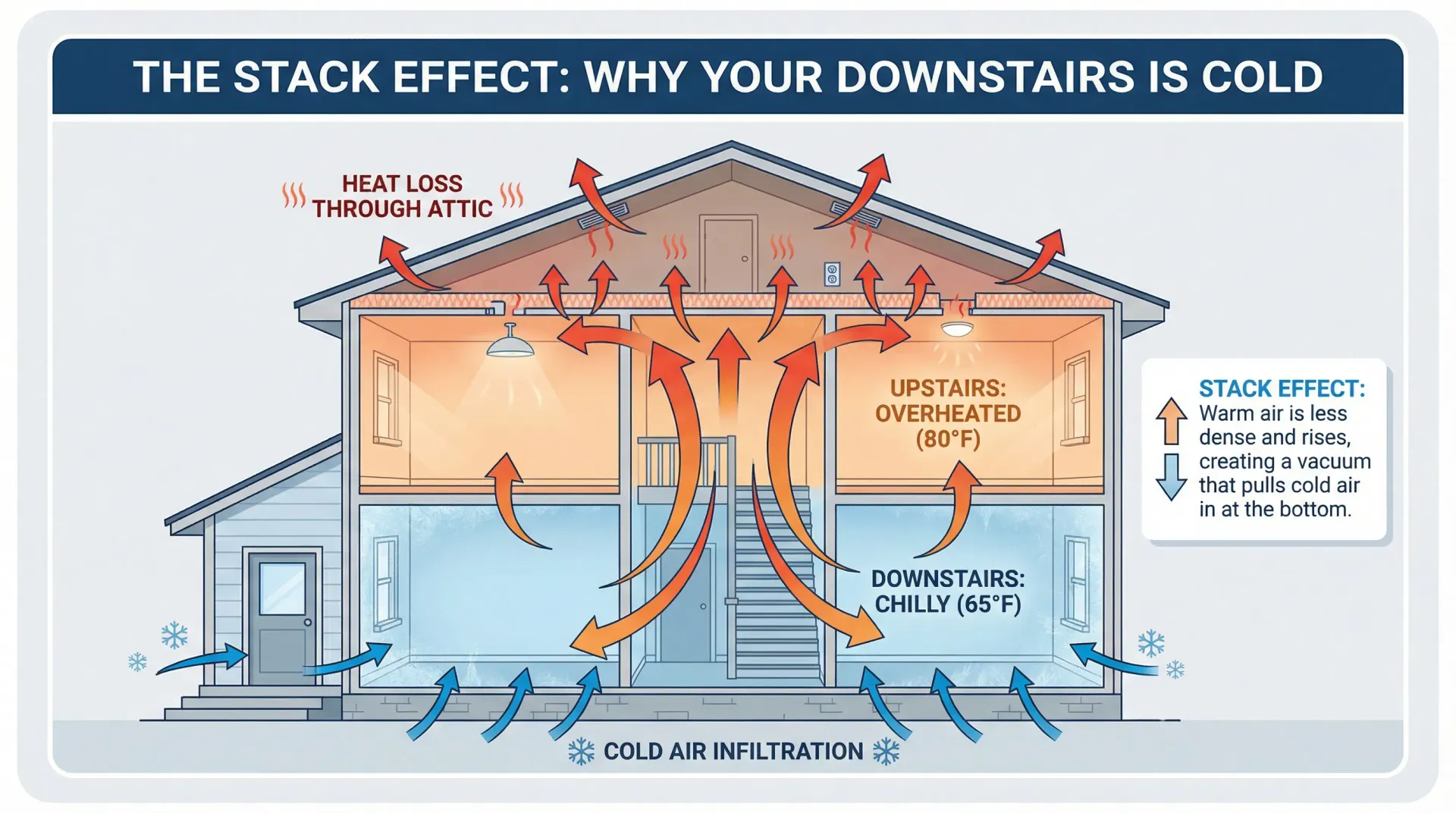
The phenomenon of heat rising and creating temperature imbalances is known as the "stack effect." In winter, the warm air generated by your furnace naturally moves to the upper levels of your home, leaving the downstairs colder. This process can be made worse by poor insulation, air leaks, and an unbalanced HVAC system. Our goal is to counter the stack effect and redistribute the warm air where you need it most.
Simple Fixes You Can Try Today
Before calling in a professional, there are several effective strategies you can implement yourself to help keep the heat downstairs:
| Strategy | How It Works | Best For |
|---|---|---|
| Run Ceiling Fans in Reverse | A clockwise rotation at low speed pushes warm air pooled at the ceiling down without creating a cooling draft. | Homes with ceiling fans in upstairs rooms or high-ceiling living areas. |
| Adjust HVAC Dampers | Dampers in your ductwork control airflow. Partially closing upstairs dampers and opening downstairs ones redirects more warm air to the lower level. | Homeowners are comfortable with accessing their ductwork (often in the attic or basement). |
| Check Your Vents | Ensure all downstairs supply vents are open and unobstructed. Conversely, partially closing upstairs vents can help balance the system. | A quick and easy check for any homeowner. |
| Use Your "Fan" Setting | Setting your thermostat’s fan to "On" instead of "Auto" will continuously circulate air, helping to mix the warm and cool air and create a more even temperature. | Good for short-term balancing, but can increase energy use if run constantly. |
For more tips on balancing your system, our post on fixing uneven heating provides a deeper dive.
Professional Solutions for Lasting Comfort
If DIY adjustments aren't enough, it may be time to consider professional solutions. At CB Air Conditioning and Heating, we often find that underlying issues with the HVAC system are the root cause of severe temperature imbalances.
- Ductwork Inspection and Sealing: Leaky or poorly designed ductwork can lose significant warm air before it reaches your downstairs rooms. We can inspect and seal your ducts to ensure efficient delivery. Consider our air duct cleaning service for optimal airflow.
- Attic Insulation: An under-insulated attic is a major source of heat loss. Adding insulation helps retain warm air in your living space, making it easier to heat your entire home. Our heating maintenance service includes insulation assessment.
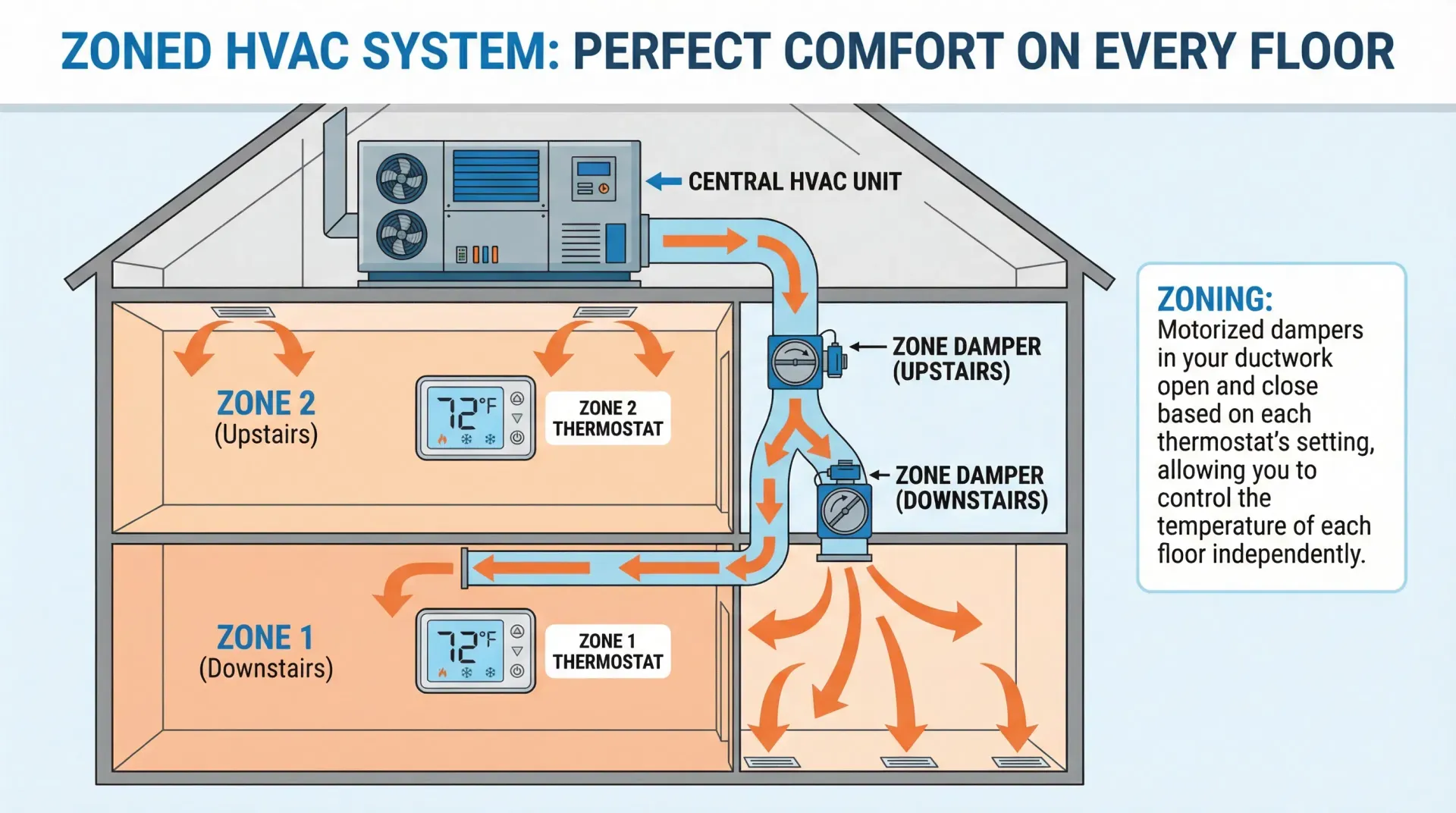
- Zoned HVAC Systems: The ultimate solution for two-story homes. A zoned system divides your home into at least two zones (upstairs and downstairs), each with its own thermostat. This allows you to control the temperature on each floor independently, ensuring comfort and maximum efficiency. Learn more about the benefits of zoning in our article on multi-split air conditioning systems.
Frequently Asked Questions
1. Will closing vents downstairs damage my furnace?
You should never close more than 20% of the vents in your home, as it can increase pressure in the ductwork and strain your furnace. It's better to partially close the upstairs vents than to fully close the downstairs vents.
2. Is it expensive to run my fan all the time?
Running the HVAC fan continuously will use more electricity than the "Auto" setting, but it's significantly less expensive than running the furnace itself. It can be a cost-effective way to improve comfort during particularly cold periods.
3. My heater is blowing cold air. What should I do?
If your heater is blowing cold air, it could be due to a range of issues, from a simple thermostat setting to a problem with the furnace itself. Check our guide on what to do when your heater is blowing cold air for troubleshooting steps.
Final Thoughts: Achieve Balanced Heating in Your Weatherford Home
You don't have to accept a home that's hot upstairs and cold downstairs. With a few adjustments and the right professional advice, you can enjoy consistent comfort in every room. The team at CB Air Conditioning and Heating has the local expertise to diagnose your home's unique heating challenges and provide effective, lasting solutions.
Tired of living with uneven temperatures?
Contact us today,
book an appointment, or call (817) 341-9505 for a comprehensive heating system evaluation. Check our
special offers for savings. We also offer 24/7
emergency heating repairs for when you need us most. If your system needs replacement, explore our
heating installation services.